Problems with Black-Dyed Parts
Recently, we’ve had rejected parts because the black dye is coming off when the parts are wiped down with DI water.

Share


Question:
Our company manufactures enclosures for the medical and telecommunications industries. Recently, we’ve had rejected parts because the black dye is coming off when the parts are wiped down with DI water. The customer also complained about a greenish tint on the part that does not match the color of the other anodized parts made by someone else. These parts do get a yellow chem film before the black anodize. I am thinking this could be part of the reason they’re seeing the greenish tint. The material is 5052-H32 × 0.060 inch thick.
I reviewed the MIL-A-8625F spec and didn’t see anything about an acceptable amount of residue or dye that can be wiped off. We’ve been trying to just wipe down the stock we already have. Should these parts be rejected and re-anodized? I would just like to get a little more knowledge before talking with our anodizer again. B.H.
Featured Content


Answer:
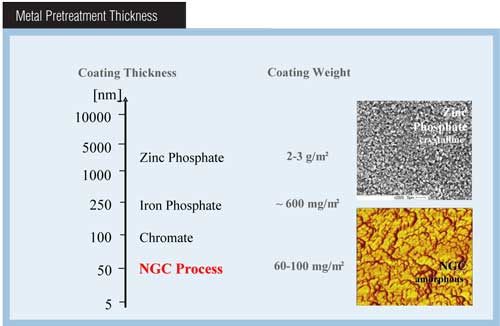
This is a tough one to pinpoint. Let’s look at the chem film (chromate conversion coating) part first. The only reason I can think of for parts to be chem filmed is if there is masking required. You don’t say anything about this, but I’ll assume that’s the case.
The parts are being cleaned and then the chem film is applied. The chem film needs approximately 24 hr to cure before adhesive masking is applied. Once the masking is applied, the chem film is normally stripped off the rest of the part before it’s anodized. This can be done by either soaking the parts in nitric acid, or maybe whatever deoxidizer the anodizer is using. Or the parts could be given an alkaline or an acid etch, etching only long enough to remove the chem film. Now the parts are ready for anodizing.
This is where I might say that the “greenish tint” you see is probably not due to the chem film, because the chem film has been eliminated from the part prior to anodizing. The black dye itself may be the culprit. There are several types of black aluminum dyes. Many of these have a characteristic tint, particularly when you look at reflected light from the part. These tints can be greenish, reddish, brownish, bluish, or purplish.
Some of the black dyes are actually “blackish.” You should consult with your anodizer about this. The anodizer can seek the advice of the dye supplier to find which of these is most acceptable for your product.
Let’s look at possible reasons why some of the black dye wipes off. I can’t tell you exactly what’s causing the problem—it’s up to your anodizer to make sure dyeing conditions are optimum. But here’s a list of items to keep under control in the process:
- Use of high-quality DI water to make up the dye bath and for rinsing parts prior to dyeing.
- Dye bath relatively free of contamination. Contamination occurs over time and from two main sources. First, “stuff” that falls into the bath—from the shop ceiling, from the air, from loads of parts being dragged over the bath. Second is contamination left on parts being dyed that haven’t been rinsed in DI water prior to dying. The more contaminated the bath, the lower quality the finish. Every dye bath has a life span. If the bath is too old (more than one year, perhaps), it may have to be dumped. Periodic analysis of the bath will help determine when it should be dumped.
- Optimum pH of the bath must be maintained at all times. The dye manufacturer gives a recommended pH for every dye.
- Temperature must be maintained. For black dye, it’s usually 140 +5°F.
- Dyeing time must be long enough for adequate absorption of dye—usually 10–20 min, but it can vary.
- Sealing is also an important part of this equation. Parts should be rinsed in DI water before sealing and the maintenance of the sealing bath is much the same as the dye bath, for the same reasons. If all processing conditions are under control, there should be little or no dye coming off the parts.
RELATED CONTENT
-
Test Methods For Evaluating Anodized Aluminum
Benefits of anodizing include durability, color stability, ease of maintenance, aesthetics, cost of initial finish and the fact that it is a safe and healthy process. Maximizing these benefits to produce a high–performance aluminum finish can be accomplished by incorporating test procedures in the manufacturing process.
-
Cleaning, Pretreatment to Meet Medical Specs ISO 13485 or FDA 21 CFR820
Maximilian Kessler from SurTec explains new practices for industrial parts cleaning, metal pretreatment and decorative electroplating in the medical device industry.
-
Aluminum Surface Finishing Corrosion Causes and Troubleshooting
In this paper, a review of several process solutions, examining coolants, solvent cleaning, alkaline clean/etch and deoxidizing/desmutting, listing intended and unintended chemical reactions along with possible mechanisms that would favor corrosion formation.